For patients & parents
Patient Care Instructions
Everything you need between visits — what to eat, how to turn an expander, where to place wax, what to do about a loose bracket, and how to wear your elastics. Save this page on your phone. If anything looks or feels wrong, call us: Springboro (937) 748-0505 · Wilmington (937) 382-5327.

Eating with braces
For the first few days after braces or an adjustment, teeth feel tender. Soft foods make that window much easier — and a few foods need to stay off the menu for the whole treatment.
- 1The first 3–5 days, stick to soft foods: yogurt, smoothies, eggs, pasta, soft cheese, mashed potatoes, soup, bananas, and ice cream.
- 2Cut everything into small pieces. Apples, carrots, corn on the cob, and sandwiches should be sliced off the core or cut into bite-size pieces first.
- 3Chew with your back teeth, not your front teeth — front-tooth biting is the number one cause of broken brackets.
- 4Rinse with water after meals and brush as soon as you can to keep food off the brackets.
Foods to avoid the entire time
- •Hard: nuts, ice, hard candy, popcorn kernels, pizza crust ends, hard taco shells
- •Sticky: caramel, taffy, gum, gummy candy, chewy granola bars
- •Sugary drinks and constant sipping of soda or sports drinks (this causes white spots)
- •Chewing on pens, pencils, fingernails, or ice
Videos & resources
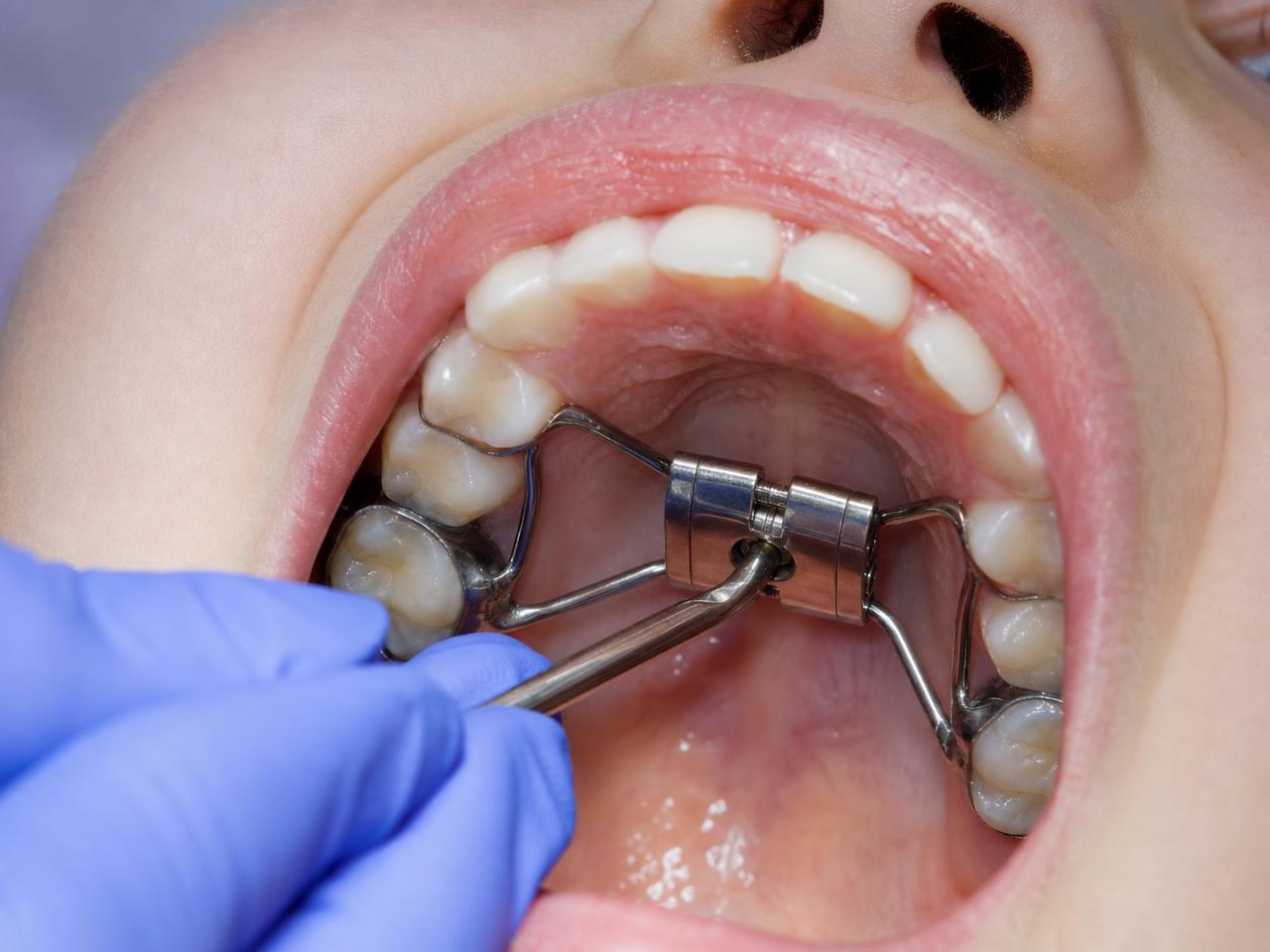
Turning a palatal expander
An expander gently widens the upper jaw to create room for permanent teeth. Parents do the turning at home — usually once a day, or exactly as Dr. Kulkarni instructs at your appointment.
- 1Have your child lie back with their head in your lap or tilted back in a reclined chair. Use a flashlight or phone light so you can see the expander clearly.
- 2Hold the key firmly and place it into the front hole of the expander screw.
- 3Push the key straight back toward the throat in one smooth motion until the next hole rotates fully into view. You should see a new hole appear at the front.
- 4Slide the key straight out toward the back of the mouth — never pull it forward, or you'll undo the turn you just made.
- 5Do the number of turns you were told (usually one per day, morning or evening) and mark it on a calendar so no turn is missed or doubled.
What's normal — and what to call about
- •A space opening between the two front teeth is normal and expected. It closes on its own.
- •Pressure behind the nose or under the eyes for a few minutes after turning is normal.
- •Speech and swallowing feel odd for 2–4 days, then adjust.
- •Call us if the key slips out and you can't find the hole, the expander feels loose, or turning becomes painful — do not force it.
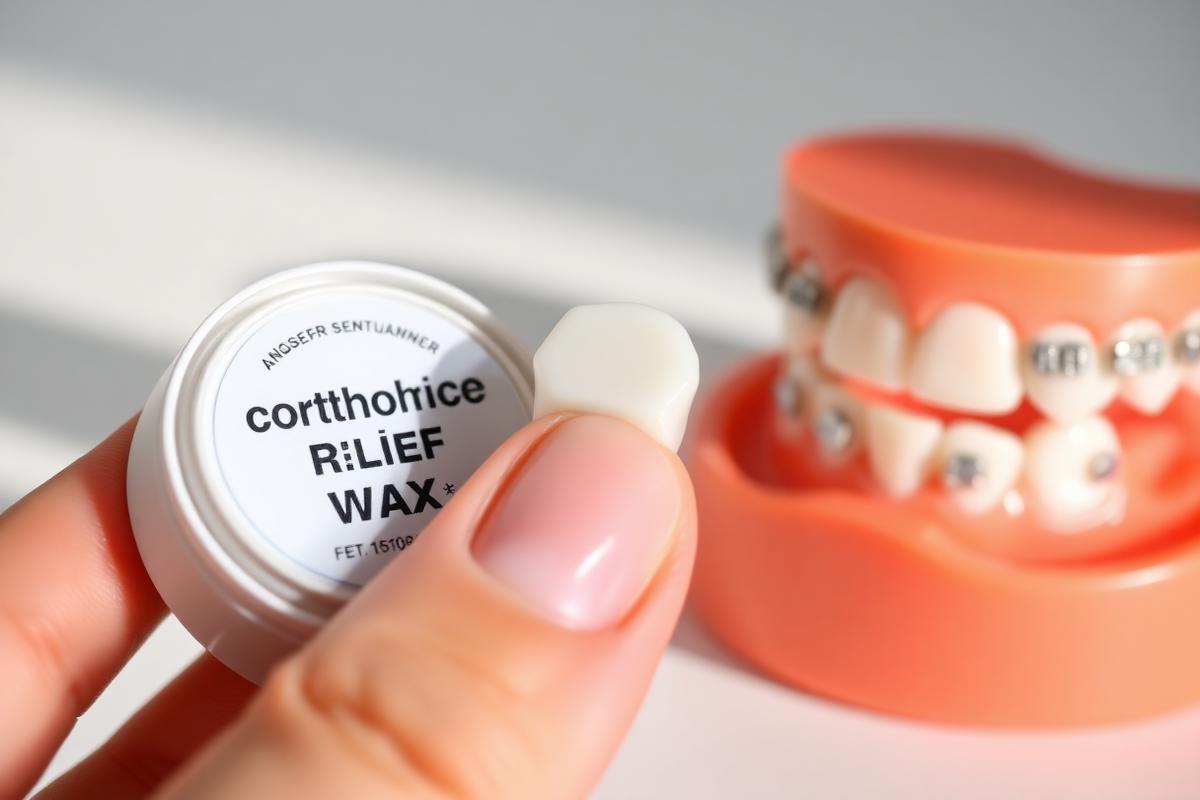
Placing orthodontic wax
Wax is the fastest fix for a bracket or wire rubbing the inside of the lip or cheek. Every patient goes home with a container — ask for more any time, free of charge.
- 1Wash your hands, then brush or rinse so the area is clean and as dry as possible.
- 2Pinch off a piece of wax about the size of a small pea and roll it between your fingers until it's soft and round.
- 3Dry the bracket with a tissue or gauze — wax will not stick to a wet bracket.
- 4Press the wax firmly over the bracket or wire end that's rubbing, and flatten it so it covers the sharp edge completely.
- 5Replace the wax whenever it falls off, and always before bed. It's safe if a small amount is swallowed.
Extra comfort tips
- •Rinse with warm salt water (1 tsp salt in 8 oz warm water) 3–4 times a day for sore spots.
- •An age-appropriate over-the-counter pain reliever helps the first few days after placement or an adjustment.
- •Sore spots usually heal in about a week as the cheeks toughen up.
Videos & resources
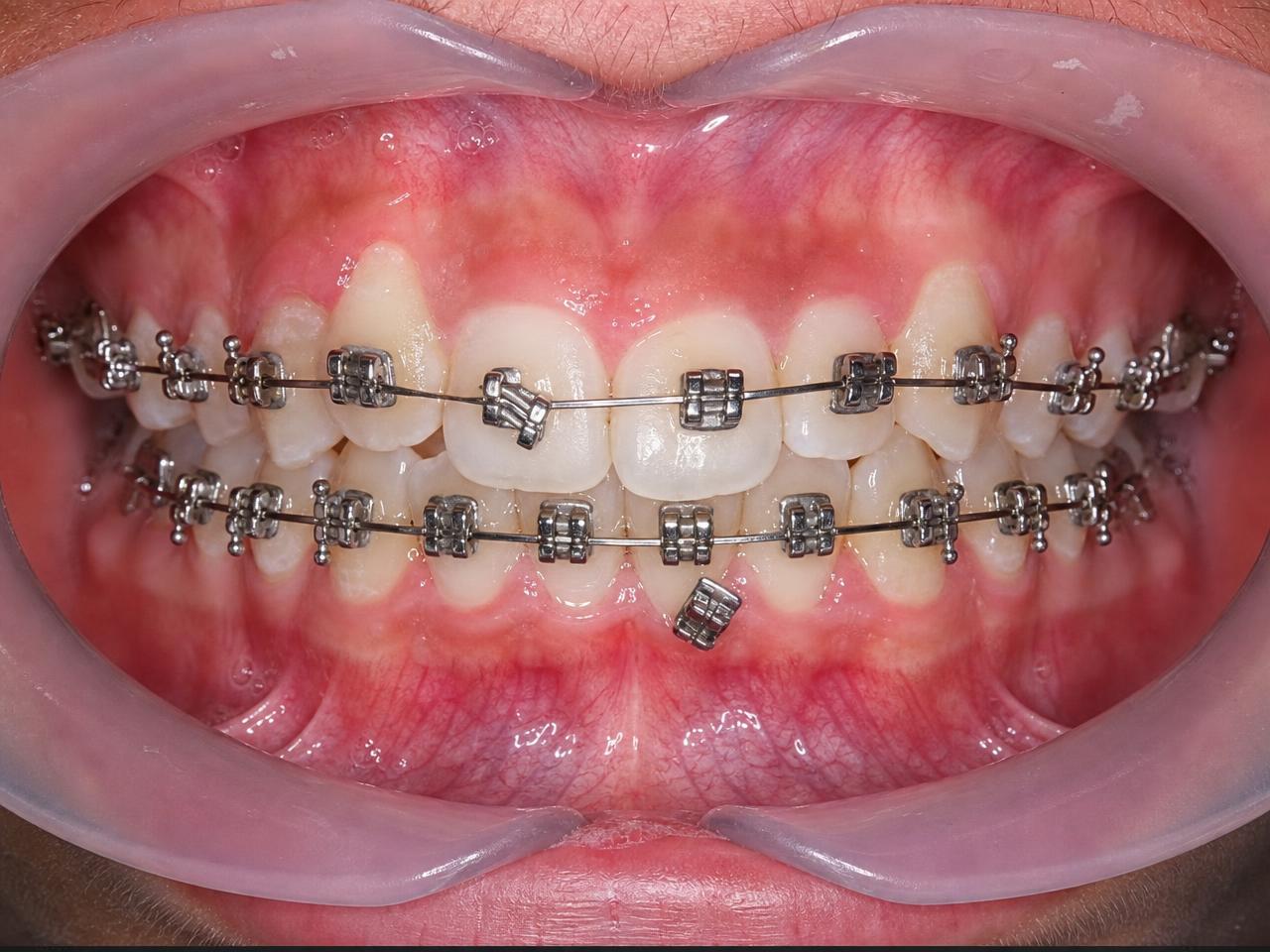
Loose or broken brackets
Brackets come loose — it happens, and it's almost never an emergency. Here's what to do until we can see you.
- 1Stay calm and check whether the bracket is still attached to the wire or has come off completely.
- 2If it's still on the wire, leave it in place and cover it with wax so it doesn't rub. Do not try to remove it.
- 3If it came off completely, save it in a small bag or container and bring it to your appointment.
- 4If a wire end is poking, use a clean pencil eraser or the back of a spoon to gently tuck it toward the tooth, then cover with wax.
- 5Call the office — Springboro (937) 748-0505 or Wilmington (937) 382-5327 — and we'll get you in to repair it. Keep your regular appointment unless we tell you otherwise.
How to prevent broken brackets
- •No biting into whole apples, corn on the cob, bagels, or crusty bread — cut and use back teeth.
- •No hard candy, ice, nuts, or popcorn kernels.
- •Wear your mouthguard for every practice and game.
- •No chewing on pens, pencils, or fingernails.
Videos & resources
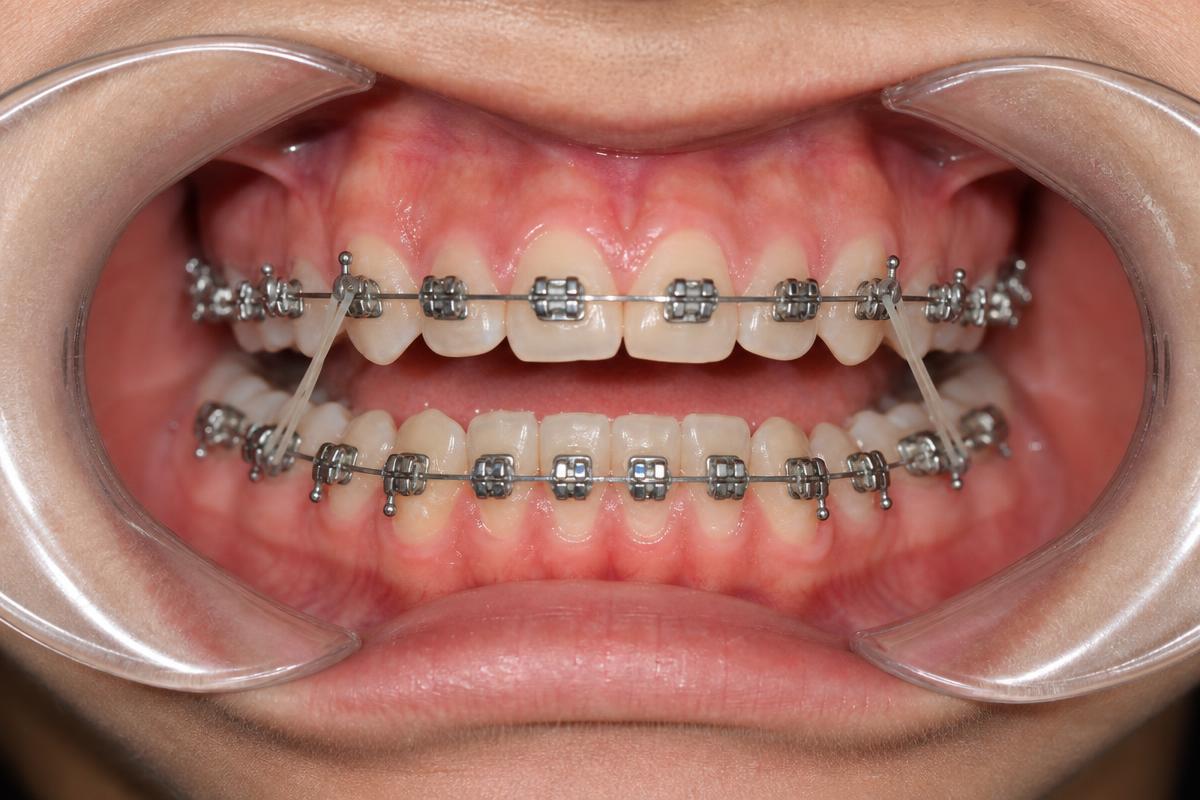
Wearing rubber bands (elastics)
Elastics correct how the upper and lower teeth fit together. Braces alone can't do it — this part depends almost entirely on the patient. Consistent wear is the single biggest factor in finishing on time.
- 1Wash your hands before you start. Use a mirror in good light for the first few weeks.
- 2Hook one end of the elastic onto the upper hook shown at your appointment (we'll draw or photograph your exact pattern for you).
- 3Stretch the elastic down and hook the other end onto the matching lower hook. Use your fingers or the small plastic elastic hook we provide.
- 4Repeat on the other side — elastics are almost always worn on both sides unless told otherwise.
- 5Wear them 20–22 hours a day: all day and all night. Take them out only to eat and to brush, then put a fresh pair right back in.
- 6Change to a fresh pair 3–4 times a day, or any time one breaks. Elastics lose their force quickly.
Important reminders
- •Never double up elastics — it doesn't work faster and can damage the tooth roots.
- •Soreness for the first 2–3 days is normal. Pushing through it is what gets teeth moving; stopping restarts the soreness.
- •If you run out, call or stop by either office — we'll hand you more free of charge.
- •Missing days adds months to treatment. This is the part parents can help most with.
Brushing & flossing with braces
- • Brush after every meal — two minutes, angling the brush above and below each bracket.
- • Use floss threaders or a water flosser once a day.
- • A proxy brush cleans between brackets and wires where a toothbrush can't reach.
- • Keep seeing your general dentist for cleanings every six months during treatment.
When to call us
- • A bracket, band, or expander is loose
- • A wire is poking and wax isn't helping
- • Pain that's severe or lasts more than 48 hours
- • You've lost your expander key or run out of elastics
Still have a question?
Call either office, email kulkarniortho@gmail.com, or message us on Instagram @kulkarniorthodontics.
Contact Us